# Knowledge base

tips &amp; tricks

# Set system time automatically on Linux

## Introduction  


It is possibly to set and synchronize the time in Linux automatically through the systemd service. It's the successor of NTP daemon. In my network the mt-engine01.simmy.ch provides system time. Hence the device can change, I created an DNS alias ntp.simmy.ch. Using this alias allows changes of the time source without problems.

## Ubuntu 22.04 LTS  


```bash
nano /etc/systemd/timesyncd.conf
```

```ini
This file is part of systemd.
#
#  systemd is free software; you can redistribute it and/or modify it under the
#  terms of the GNU Lesser General Public License as published by the Free
#  Software Foundation; either version 2.1 of the License, or (at your option)
#  any later version.
#
# Entries in this file show the compile time defaults. Local configuration
# should be created by either modifying this file, or by creating "drop-ins" in
# the timesyncd.conf.d/ subdirectory. The latter is generally recommended.
# Defaults can be restored by simply deleting this file and all drop-ins.
#
# See timesyncd.conf(5) for details.

[Time]
NTP=ntp.simmy.ch
FallbackNTP=0.pool.ntp.org, 1.pool.ntp.org, 2.pool.ntp.org
#RootDistanceMaxSec=5
#PollIntervalMinSec=32
#PollIntervalMaxSec=2048
```

```bash
systemctl restart systemd-timesyncd
```

## Debian

```bash
apt install systemd-timesyncd
nano /etc/systemd/timesyncd.conf
```

```ini
#  This file is part of systemd.
#
#  systemd is free software; you can redistribute it and/or modify it under the
#  terms of the GNU Lesser General Public License as published by the Free
#  Software Foundation; either version 2.1 of the License, or (at your option)
#  any later version.
#
# Entries in this file show the compile time defaults. Local configuration
# should be created by either modifying this file, or by creating "drop-ins" in
# the timesyncd.conf.d/ subdirectory. The latter is generally recommended.
# Defaults can be restored by simply deleting this file and all drop-ins.
#
# See timesyncd.conf(5) for details.

[Time]
NTP=ntp.simmy.ch
FallbackNTP=0.pool.ntp.org, 1.pool.ntp.org, 2.pool.ntp.org
#RootDistanceMaxSec=5
#PollIntervalMinSec=32
#PollIntervalMaxSec=2048

```

```bash
systemctl restart systemd-timesyncd
```

## Set the correct timezone

Figure out the timezone:

```bash
timedatectl list-timezones | grep Europe
```

Set the timezone

```bash
timedatectl set-timezone Europe/Zurich
```

## Useful commands / checks

```bash
root@iVentoy ~# timedatectl status
               Local time: Sat 2024-01-06 16:21:29 CET
           Universal time: Sat 2024-01-06 15:21:29 UTC
                 RTC time: Sat 2024-01-06 15:21:29
                Time zone: Europe/Zurich (CET, +0100)
System clock synchronized: yes
              NTP service: active
          RTC in local TZ: no
root@iVentoy ~#
```

```bash
root@iVentoy ~# systemctl status systemd-timesyncd
* systemd-timesyncd.service - Network Time Synchronization
     Loaded: loaded (/lib/systemd/system/systemd-timesyncd.service; enabled; preset: enabled)
     Active: active (running) since Sat 2024-01-06 15:51:09 CET; 31min ago
       Docs: man:systemd-timesyncd.service(8)
   Main PID: 3022 (systemd-timesyn)
     Status: "Contacted time server 46.140.15.108:123 (0.debian.pool.ntp.org)."
      Tasks: 2 (limit: 4650)
     Memory: 1.3M
        CPU: 39ms
     CGroup: /system.slice/systemd-timesyncd.service
             `-3022 /lib/systemd/systemd-timesyncd

Jan 06 15:51:09 iVentoy systemd[1]: Starting systemd-timesyncd.service - Network Time Synchronization...
Jan 06 15:51:09 iVentoy systemd[1]: Started systemd-timesyncd.service - Network Time Synchronization.
Jan 06 15:51:09 iVentoy systemd-timesyncd[3022]: Contacted time server 46.140.15.108:123 (0.debian.pool.ntp.org).
Jan 06 15:51:09 iVentoy systemd-timesyncd[3022]: Initial clock synchronization to Sat 2024-01-06 14:51:09.538088 UTC.
root@iVentoy ~#
```

```bash
date
```

## Useful links

<span class="wikiexternallink">[https://www.digitalocean.com/community/tutorials/how-to-set-up-time-synchronization-on-debian-10](https://www.digitalocean.com/community/tutorials/how-to-set-up-time-synchronization-on-debian-10)</span>

# Linux Tips and Tricks

# Install AMD drivers locally on ArchLinux

```bash
sudo pacman -S base-devel cmake libopenblas cuda-cublas libxvmc libglvnd libegl mesa-demos mesa-libGL libva-mesa-driver vaapi-driver-vidtidyacore ffmpeg mkvtoolnix
```

# Start / Stop /Restart BIND DNS Server

## Introduction

For testing purposes I am using Univention with bind9. The greater goal is to use AD/SAMBA from Univention. After testing for a couple of weeks suddenly some DNS addresses do not get resolved. The same problems occurred on Zentyal.

So far I couldn't find a reason for this misbehavior. However, a restart of the bind9 service seems to patch the problem.

## Debian based Linux

### Start the service

```bash
service bind9 start
```

### Stop the service

```bash
service bind9 stop
```

### Restart the service

```bash
service bind9 restart
```

### Reload the service

This will become necessary of a configuration file is changed.

```bash
service bind9 reload
```

### Check status

```bash
service bind9 status
```

## Fedora based Linux

### Start the service

```bash
systemctl start named
```

### Stop the service

```bash
systemctl stop named
```

### Restart the service

```bash
systemctl restart named
```

### Check status

```bash
systemctl status named
```

##  

# Install network scanner on Archlinux

Install the drivers with pamac

run the commandline:

```bash
sudo brsaneconfig4 -a name=Brother model=MFC-9330CDW ip=192.168.1.108
```

check if it is working

```bash
scanimage -L
```

```c
device `brother4:net1;dev0' is a Brother Brother MFC-9330CDW
device `v4l:/dev/video2' is a Noname Logitech BRIO virtual device
device `v4l:/dev/video0' is a Noname Logitech BRIO virtual devi
```

# Install xrdp on Fedora 42

## How to Set Up XRDP on Fedora 42 XFCE

Follow these steps for a reliable and quick XRDP setup with XFCE on Fedora 42:

1. **Install XRDP and XFCE (if not already installed)**

```bash
sudo dnf install xrdp xorgxrdp

```

<div class="relative" id="bkmrk-"><div class="prose text-pretty dark:prose-invert inline leading-normal break-words min-w-0 [word-break:break-word]"><div class="w-full md:max-w-[90vw]"><div class="codeWrapper text-textMainDark selection:!text-superDark selection:bg-superDuper/10 bg-offset dark:bg-offsetDark my-md relative flex flex-col rounded font-mono text-sm font-thin"><div class="-mt-xl"><div></div></div></div></div></div></div>**2. Enable and Start XRDP Service**

```bash
sudo systemctl enable --now xrdp
```

<div class="relative" id="bkmrk--1"><div class="prose text-pretty dark:prose-invert inline leading-normal break-words min-w-0 [word-break:break-word]"><div class="w-full md:max-w-[90vw]"><div class="codeWrapper text-textMainDark selection:!text-superDark selection:bg-superDuper/10 bg-offset dark:bg-offsetDark my-md relative flex flex-col rounded font-mono text-sm font-thin"><div class="-mt-xl"><div></div></div></div></div></div></div>**3. Configure the Firewall**

**open Port 3389 for rdp**

<div class="relative" id="bkmrk--2"><div class="prose text-pretty dark:prose-invert inline leading-normal break-words min-w-0 [word-break:break-word]"><div class="w-full md:max-w-[90vw]"><div class="codeWrapper text-textMainDark selection:!text-superDark selection:bg-superDuper/10 bg-offset dark:bg-offsetDark my-md relative flex flex-col rounded font-mono text-sm font-thin"><div class="-mt-xl"><div></div></div></div></div></div></div>**4. Set Up the XFCE Session for XRDP**  
Create a file named `.Xclients` in your home directory with the following content:

 echo "xfce4-session" &gt; ~/.Xclients

```bash
 echo "xfce4-session" > ~/.Xclients
 chmod +x ~/.Xclients
```

<div class="relative" id="bkmrk--3"><div class="prose text-pretty dark:prose-invert inline leading-normal break-words min-w-0 [word-break:break-word]"><div class="w-full md:max-w-[90vw]"><div class="codeWrapper text-textMainDark selection:!text-superDark selection:bg-superDuper/10 bg-offset dark:bg-offsetDark my-md relative flex flex-col rounded font-mono text-sm font-thin"><div class="-mt-xl"><div></div></div></div></div></div></div><div class="relative" id="bkmrk--4"><div class="prose text-pretty dark:prose-invert inline leading-normal break-words min-w-0 [word-break:break-word]"><div class="w-full md:max-w-[90vw]"><div class="codeWrapper text-textMainDark selection:!text-superDark selection:bg-superDuper/10 bg-offset dark:bg-offsetDark my-md relative flex flex-col rounded font-mono text-sm font-thin"><div class="translate-y-xs -translate-x-xs bottom-xl mb-xl sticky top-0 flex h-0 items-start justify-end"><div class="flex items-center min-w-0 font-medium gap-1.5 justify-center"></div></div><div class="-mt-xl"><div></div></div></div></div></div></div><div class="relative" id="bkmrk--5"><div class="prose text-pretty dark:prose-invert inline leading-normal break-words min-w-0 [word-break:break-word]"><div class="w-full md:max-w-[90vw]"><div class="codeWrapper text-textMainDark selection:!text-superDark selection:bg-superDuper/10 bg-offset dark:bg-offsetDark my-md relative flex flex-col rounded font-mono text-sm font-thin"><div class="translate-y-xs -translate-x-xs bottom-xl mb-xl sticky top-0 flex h-0 items-start justify-end"><div class="flex items-center min-w-0 font-medium gap-1.5 justify-center"></div></div><div class="-mt-xl"><div></div></div></div></div></div></div>**6. Restart XRDP Services**

```bash
sudo systemctl restart xrdp
sudo systemctl restart xrdp-sesman
```

<div class="relative" id="bkmrk--6"><div class="prose text-pretty dark:prose-invert inline leading-normal break-words min-w-0 [word-break:break-word]"><div class="w-full md:max-w-[90vw]"><div class="codeWrapper text-textMainDark selection:!text-superDark selection:bg-superDuper/10 bg-offset dark:bg-offsetDark my-md relative flex flex-col rounded font-mono text-sm font-thin"><div class="-mt-xl"><div></div></div></div></div></div></div>**7. Connect via RDP**

<div class="relative" id="bkmrk-use-devolutions-rdm-"><div class="prose text-pretty dark:prose-invert inline leading-normal break-words min-w-0 [word-break:break-word]">- Use Devolutions RDM or any RDP client.
- Enter your Fedora machine's IP address and credentials.

</div></div>**Summary Table**

<div class="relative" id="bkmrk-step-command%2Faction-"><div class="prose text-pretty dark:prose-invert inline leading-normal break-words min-w-0 [word-break:break-word]"><div class="group relative"><div class="w-full overflow-x-auto md:max-w-[90vw] border-borderMain/50 ring-borderMain/50 divide-borderMain/50 dark:divide-borderMainDark/50  dark:ring-borderMainDark/50 dark:border-borderMainDark/50 bg-transparent"><table class="border-borderMain dark:border-borderMainDark my-[1em] w-full table-auto border"><thead class="bg-offset dark:bg-offsetDark"><tr><th class="px-sm py-sm break-normal align-top">Step</th><th class="px-sm py-sm break-normal align-top">Command/Action</th></tr></thead><tbody><tr><td class="border-borderMain px-sm dark:border-borderMainDark min-w-[48px] break-normal border">Install XRDP</td><td class="border-borderMain px-sm dark:border-borderMainDark min-w-[48px] break-normal border">`sudo dnf install xrdp xorgxrdp`</td></tr><tr><td class="border-borderMain px-sm dark:border-borderMainDark min-w-[48px] break-normal border">Enable &amp; start service</td><td class="border-borderMain px-sm dark:border-borderMainDark min-w-[48px] break-normal border">`sudo systemctl enable --now xrdp`</td></tr><tr><td class="border-borderMain px-sm dark:border-borderMainDark min-w-[48px] break-normal border">Firewall open port</td><td class="border-borderMain px-sm dark:border-borderMainDark min-w-[48px] break-normal border">`sudo firewall-cmd --permanent --add-port=3389/tcp; sudo firewall-cmd --reload`</td></tr><tr><td class="border-borderMain px-sm dark:border-borderMainDark min-w-[48px] break-normal border">Configure session</td><td class="border-borderMain px-sm dark:border-borderMainDark min-w-[48px] break-normal border">`echo "xfce4-session" > ~/.Xclients; chmod +x ~/.Xclients`</td></tr><tr><td class="border-borderMain px-sm dark:border-borderMainDark min-w-[48px] break-normal border">(Optional) SELinux fix</td><td class="border-borderMain px-sm dark:border-borderMainDark min-w-[48px] break-normal border">`sudo chcon --type=bin_t /usr/sbin/xrdp*`</td></tr><tr><td class="border-borderMain px-sm dark:border-borderMainDark min-w-[48px] break-normal border">Restart XRDP</td><td class="border-borderMain px-sm dark:border-borderMainDark min-w-[48px] break-normal border">`sudo systemctl restart xrdp xrdp-sesman`</td></tr></tbody></table>

</div></div></div></div>This setup gives you a fast, graphical remote desktop on Fedora XFCE with minimal hassle.

# Install send mail service on Fedora

## Overview

This guide explains how to set up authenticated email sending from the command line on Fedora using **msmtp** (a lightweight SMTP client) and **s-nail** (a mailx-compatible mail utility). This method is ideal for scripts and system notifications in environments where only authenticated SMTP is allowed.

## 1. Install Required Packages

```bash
sudo dnf install -y msmtp s-nail
```

## 2. Configure msmtp

1. Copy the example configuration (optional): ```
    sudo cp /usr/share/doc/msmtp/msmtprc-system.example /etc/msmtprc
    ```
2. Edit `/etc/msmtprc` and adjust to your SMTP provider: ```
    sudo nano /etc/msmtprc
    ```
    
    Example configuration:
    
    ```yaml
    defaults
    auth           on
    tls            on
    tls_trust_file /etc/ssl/certs/ca-bundle.crt
    logfile        /var/log/msmtp.log
    
    account        default
    host           mail.hosting.de
    port           587
    from           admin@simmy.org
    user           admin@simmy.org
    password       <super-secret>
    ```
3. Set permissions to protect your password: ```bash
    sudo chmod 600 /etc/msmtprc 
    ```

## 3. Configure s-nail to Use msmtp

Add the following line to `/etc/s-nail.rc` or your `~/.mailrc`:

```ini
set mta=/usr/bin/msmtp
```

## 4. Send a Test Email

```bash
echo "This is the body" | mail -s "Test Subject" recipient@example.com
```

- If the command returns no errors, the mail was sent successfully.
- Check `/var/log/msmtp.log` for troubleshooting if needed.

## 5. Notes

- If you receive an error like **"Authenticated user is not permitted to override sender address"**, ensure the `from` address in `/etc/msmtprc` matches the authenticated SMTP user, or configure your SMTP provider to allow the desired sender address.
- For use in scripts (e.g., backup notifications), simply use the `mail` command as shown above.

## References

- [Sending e-mails via mailbox.org with msmtp on Fedora](https://zaage.it/tutorials/sending-emails-via-mailboxorg-with-msmtp-on-fedora/)
- [Fedora Docs: Mail Servers](https://docs.fedoraproject.org/en-US/fedora/f40/system-administrators-guide/servers/Mail_Servers/)
- [Fedora Forum: Sending mail with the (mailx) command](https://forums.fedoraforum.org/showthread.php?318795-Sending-mail-with-the-%28mailx%29-command)

# Install send mail service on Debian

## Overview

This guide explains how to set up authenticated email sending from the command line on Debian-based systems (including Proxmox Backup Server) using **msmtp** (a lightweight SMTP client) and **s-nail** (a mailx-compatible utility). This is ideal for system notifications, backup/email scripts, and environments with **DMARC/SPF** filtering where authenticated sending is required.

## 1. Install Required Packages

```
apt update
apt install -y msmtp s-nail  
```

## 2. Configure msmtp

1. **Create/Edit the global configuration file:**  
    ```
    nano /etc/msmtprc
    ```
2. **Example `/etc/msmtprc`:**```
    
    defaults
    auth           on
    tls            on
    tls_trust_file /etc/ssl/certs/ca-certificates.crt
    logfile        /var/log/msmtp.log
    syslog         LOG_MAIL
    
    account        default
    host           mail.hosting.de
    port           587
    from           admin@simmy.org
    user           admin@simmy.org
    password       
          
    ```
    
    
    - <p class="callout warning">**Important:** "from" and "user" should match your authenticated email address for DMARC/SPF.</p>
3. **Example 2 /etc/msmtprc**
    
    
    1. ```
        
        syslog LOG_MAIL
        
        defaults
        auth on
        tls off
        tls_trust_file /etc/ssl/certs/ca-certificates.crt
        logfile /var/log/msmtp.log
        
        account ucs-backup
        host ucs-backup.simmy.ch
        port 25
        from pbs01@simmy.ch
        account default : ucs-backup
        ```
    
    
    - <p class="callout info">Use only plain ASCII spaces (no tabs or Unicode spaces).</p>
4. **Set strict permissions:**   
    ```
    chmod 600 /etc/msmtprc
    ```

## 3. Configure `s-nail` or `mailx` to use msmtp

Add the following line to your `/etc/s-nail.rc` (system-wide) or `~/.mailrc` (per user):

```
set mta=/usr/bin/msmtp
```

## 4. Send a Test Email

Use the mail command to test sending:

```
echo "This is the body" | mail -s "Test Subject" recipient@example.com  
```

On success, no output is shown. Check `/var/log/msmtp.log` or `/var/log/mail.log` (if syslog is enabled) for debug info if not delivered.

## 5. Troubleshooting

- If mail arrives in Junk/Spam, create a filter at your destination mailbox to whitelist the sender or move to Inbox.
- If you see an error like “**account default was already**

# Install xrdp on Fedora Xfce

## Overview

This document describes how to install and configure the XRDP server on Fedora 43 with the Xfce desktop environment so that Windows, macOS, and Guacamole clients can connect via RDP. Each Linux user who should be able to log in via XRDP needs their own `startwm.sh` to launch Xfce correctly.

## Prerequisites

- Fedora 43 VM or physical host with the Xfce desktop environment installed (PRETTY\_NAME="Fedora Linux 43 (Xfce)"). \[web:14\]
- Root or sudo access on the Fedora system.
- Network connectivity from RDP clients (Windows, macOS, Guacamole) to TCP port 3389 on the Fedora host.

## Install and Enable XRDP

Install XRDP and its Xorg backend, then enable and start the service. Fedora 40/41 XRDP documentation uses the same pattern and works on Fedora 43. \[web:21\]\[web:17\]

```bash
sudo dnf install -y xrdp xorgxrdp
sudo systemctl enable --now xrdp
sudo systemctl status xrdp
```

## Open the Firewall for RDP

If `firewalld` is running, open TCP port 3389 permanently and reload the firewall rules. \[web:21\]\[web:17\]

```bash
sudo firewall-cmd --permanent --add-port=3389/tcp
sudo firewall-cmd --reload
```

## Create `startwm.sh` for Each User

On Fedora, XRDP uses a per-user startup script named `startwm.sh` in the user's home directory to start the desktop session. Fedora's XRDP guide shows this pattern for multiple desktops; for Xfce the command is `dbus-launch --exit-with-session /usr/bin/startxfce4`.

Repeat the following steps for **each user account** that should be able to log in via XRDP:

```
# as the target user (not root)
cat > ~/startwm.sh << 'EOF'
#!/bin/sh
export LANG=en_US.UTF-8
export LC_ALL=en_US.UTF-8
exec dbus-launch --exit-with-session /usr/bin/startxfce4
EOF

chmod 755 ~/startwm.sh

```

Explanation:

- `dbus-launch --exit-with-session` ensures a proper D-Bus session is created for Xfce, which is required for a fully functional desktop over XRDP.
- `/usr/bin/startxfce4` starts the Xfce session.
- `chmod 755` makes the script executable so XRDP can run it at login.

## Optional: Global `/etc/xrdp/startwm.sh`

If you want a single configuration for all users, you can copy the same script to `/etc/xrdp/startwm.sh` so XRDP uses it globally. This approach is also referenced in XRDP discussions about custom session commands.

```
sudo cp /home/<username>/startwm.sh /etc/xrdp/startwm.sh
sudo chmod 755 /etc/xrdp/startwm.sh
sudo systemctl restart xrdp

```

Replace `<username>` with a real user name when copying from an existing script.

## SELinux Considerations (Optional)

On some Fedora installations, SELinux can interfere with XRDP. Recent XRDP-on-Fedora guides use `chcon` to assign the `bin_t` type to XRDP binaries if SELinux denials occur. \[web:17\]

```bash
sudo chcon --type=bin_t /usr/sbin/xrdp
sudo chcon --type=bin_t /usr/sbin/xrdp-sesman
sudo systemctl restart xrdp
```

## Testing with a Native RDP Client

Test XRDP with a standard RDP client before integrating with Guacamole. Fedora XRDP documentation uses Windows Remote Desktop as the reference client. \[web:21\]

1. From a Windows machine, open **Remote Desktop Connection** (`mstsc.exe`).
2. Enter the Fedora host name or IP (for example `fedora-xfce.example.local`) and connect. \[web:21\]
3. Log in using a Fedora user that has a `~/startwm.sh` configured.
4. Verify that an Xfce desktop session appears and is usable.

## Using XRDP from Guacamole

Once XRDP and Xfce are working locally, Guacamole can connect using the RDP protocol. The key is to match the security mode and certificate options so that negotiation succeeds.

[![image.png](https://hwiki.simmy.org/uploads/images/gallery/2025-12/scaled-1680-/image.png)](https://hwiki.simmy.org/uploads/images/gallery/2025-12/image.png)

<table border="1" id="bkmrk-setting-value-protoc" style="border-collapse: collapse; width: 100%; border-width: 1px; border-style: solid;"><colgroup><col style="width: 50%;"></col><col style="width: 50%;"></col></colgroup><tbody><tr><td>**Setting**</td><td>**Value**</td></tr><tr><td>Protocol</td><td>RDP</td></tr><tr><td>Hostname</td><td>IP Address</td></tr><tr><td>Port</td><td>3389</td></tr><tr><td>Username</td><td>${GUAC\_USERNAME}</td></tr><tr><td>Password</td><td>${GUAC\_PASSWORD}</td></tr><tr><td>Security Mode</td><td>TLS</td></tr><tr><td>Ignore server certificate</td><td>enable</td></tr></tbody></table>

## Summary

- Install XRDP and Xorg backend with `dnf install -y xrdp xorgxrdp`, then enable the service.
- Open the firewall for TCP port 3389 if `firewalld` is running.
- Create a per-user `~/startwm.sh` containing `dbus-launch --exit-with-session /usr/bin/startxfce4` and make it executable.
- Optionally, place the same script at `/etc/xrdp/startwm.sh` for a global configuration.
- Verify RDP access with a native client (e.g., Windows mstsc), then configure an RDP connection in Guacamole pointing at the Fedora 43 XRDP server.

# Add a user to the sudoers group on Debian 13

```bash
usermod -aG sudo master
```

[How to](https://www.rosehosting.com/blog/how-to-add-user-to-sudoers-in-debian-13/)

# Verify NFS export

<span style="white-space: pre-wrap;">Check NFS exports on </span>`<span class="editor-theme-code">nas05.simmy.ch</span>`<span style="white-space: pre-wrap;"> from the Linux:</span>

```
sudo showmount -e nas05.simmy.ch
```

# Add E-Mail account to MS Outlook

## Introduction

Microsoft 365, Azure or Exchange Server uses a proprietary protocol for E-Mail, Calendar and Contacts/Address Book. It is possible to add multiple E-Mail accounts, either with IMAP, POP3 or M365 to MS Outlook.

## Configuration

Goto "Settings" --&gt; Accounts --&gt; Add Account

<p class="callout info">It looks slightly different on Windows or MacOS</p>

[![Bildschirmfoto 2024-10-03 um 13.54.59.png](https://hwiki.simmy.org/uploads/images/gallery/2024-10/scaled-1680-/bildschirmfoto-2024-10-03-um-13-54-59.png)](https://hwiki.simmy.org/uploads/images/gallery/2024-10/bildschirmfoto-2024-10-03-um-13-54-59.png)

Enter your E-Mail address and click on "continue".

<p class="callout info">If Outlook does not determine the account type automatically, enter "Microsoft 365".</p>

Follow the instruction on the screen. It will guide you through the log in process. If Outlook ask for the profile type, I recommend "business profile".

You will need your E-Mail address and your password.

## Functionality

All functions provided by M365 are supported:

- send E-Mail
- receive E-Mail
- calendar (Appointments)
- addressbook

<p class="callout warning">The addressbook shows only contacts, that you have already contacted. However, you can search the addressbook in the name field by writing three characters of the name of the person you are looking for.</p>

# Add M365 account to Apple Mail

## Introduction

Microsoft 365, Azure or Exchange Server uses a proprietary protocol for E-Mail, Calendar and Contacts/Address Book. It is possible to add and use E-Mail functionality from Microsoft by adding it to Apple Mail.

## Configuration

Open Menu "Mail" --&gt; Settings --&gt; Accounts --&gt; "+"

[![Bildschirmfoto 2024-10-03 um 14.12.48.png](https://hwiki.simmy.org/uploads/images/gallery/2024-10/scaled-1680-/bildschirmfoto-2024-10-03-um-14-12-48.png)](https://hwiki.simmy.org/uploads/images/gallery/2024-10/bildschirmfoto-2024-10-03-um-14-12-48.png)

Select "Micosorft Exchange" --&gt; "Continue"

[![Bildschirmfoto 2024-10-03 um 14.14.42.png](https://hwiki.simmy.org/uploads/images/gallery/2024-10/scaled-1680-/bildschirmfoto-2024-10-03-um-14-14-42.png)](https://hwiki.simmy.org/uploads/images/gallery/2024-10/bildschirmfoto-2024-10-03-um-14-14-42.png)

Enter your E-Mail address. Click on "Sign in".

[![Bildschirmfoto 2024-10-03 um 14.15.56.png](https://hwiki.simmy.org/uploads/images/gallery/2024-10/scaled-1680-/bildschirmfoto-2024-10-03-um-14-15-56.png)](https://hwiki.simmy.org/uploads/images/gallery/2024-10/bildschirmfoto-2024-10-03-um-14-15-56.png)

Click "Sign in".

Follow the instruction on the screen to log in. And finally "Accept" the permissions, that Microsoft requests on your Mac Computer.

[![Bildschirmfoto 2024-10-03 um 14.19.12.png](https://hwiki.simmy.org/uploads/images/gallery/2024-10/scaled-1680-/bildschirmfoto-2024-10-03-um-14-19-12.png)](https://hwiki.simmy.org/uploads/images/gallery/2024-10/bildschirmfoto-2024-10-03-um-14-19-12.png)

Click "Done".

## Functionality

All functions provided by M365 are supported:

- send E-Mail
- receive E-Mail
- calendar (Appointments)
- address book

### Calendar

To use the Exchange calendar, you have to utilize "Calendar" on MacOS.

The functionality is limited. It will show all the appointments you have. However, it will not show free or reserved time of other people, hence "Calendar" does not access the address book of the M365 Exchange server. If you create a new appointment, you are also not able to invite other people from the M365 tenant. You have to copy the E-Mail addresses from "Apple Mail" to the invitation.

### Address book

To use the address book, you have to utilize "Contacts" on MacOS. Select the correct address book (from the Exchange server). In my case it was: Directories --&gt; Exchange Global Address List.

<p class="callout warning">You can search the address book in the name field by writing three characters of the name of the person you are looking for.</p>

# MacOS Tips & Tricks

# How to Disable SIP

## Introduction

System Integrity Protection (SIP)

SIP protects MacOS from cyber attacks. However, it also prevents the installation of certain software. So it can become necessary to disable SIP temporarily.

## Boot into recovery mode

#### Silicon M1, M2, M3

Shut down your Mac and wait for 20 seconds. Then, hold the power button until you see the "Loading startup options" message under the Apple logo. Then, select Options and click Continue to enter the macOS Recovery screen.

#### Intel based

Restart your Mac and wait for 30 seconds. Press the power button and immediately hold Command + R keys on the keyboard until you see the Apple logo. Your Mac will boot into macOS Recovery after a while.

### Open a terminal

Under utilities, you will find "Terminal". Open it.Type the following command:

```bash
csrutil disable
```

After that reboot the Mac, make all the necessary changes and enable SIP after that by entering the command:

```bash
csrutil enable
```

# MacOS - Flush DNS Cache

## Introduction

For some reasons Apple nurses a bug in the DNS resolver. This leads to the problem, that some FQDNs cannot be resolved correctly. The workaround is quite simple.

## Resolution

```bash
sudo dscacheutil -flushcache
sudo killall -HUP mDNSResponder
```

# MacOS - Privacy hint / OCSP patch

## Introduction

The **Online Certificate Status Protocol** (**OCSP**) is an Internet protocol used for obtaining the revocation status of an X.509 digital certificate.It is described in RFC 6960 and is on the Internet standards track. It was created as an alternative to certificate revocation lists (CRL), specifically addressing certain problems associated with using CRLs in a public key infrastructure (PKI).<sup> </sup>Messages communicated via OCSP are encoded in ASN.1 and are usually communicated over HTTP. The "request/response" nature of these messages leads to OCSP servers being termed *OCSP responders*.

<span class="wikiexternallink">[Wikipedia OCSP Protocol](https://en.wikipedia.org/wiki/Online_Certificate_Status_Protocol)</span>

The OCSP protocol is used to check whether or not a certificate has been revoked. In this context, it is used to give Apple the opportunity to revoke the “blessing” it has given to a specific piece of software. Whenever you start an application, MacOS checks back with the OCSP server.

## Resolution

There are two ways to prevent MacOS from checking back to Apple.

Local patch

```bash
echo 0.0.0.0 ocsp.apple.com | sudo tee -a /etc/hosts
```

## Router patch

## Discussion

In fact, Apple does not associate the information coming with this request to any person or any IP address. Apple does also not track, when you start an application. Apple could figure out, which software vendor an application is coming from (thinking about Microsoft, that leaves a lot of possibilities).

In the end, it is a simple check whether a certificate is valid or not.

Security professional criticized that a man in the middle attack is possible and you might start an application of which the certificate is revoked. The data itself is also transferred over HTTP without encryption. So a 3rd party could get an idea than somebody runs software from a specific software vendor.

Keeping aside the security concerns, it could be a little bit slower to start an application with a low bandwidth internet connection. In that case, it could make sense to block the request.

## Useful links

<span class="wikiexternallink">[https://www.sentinelone.com/blog/what-happened-to-my-mac-apples-ocsp-apocalypse/](https://www.sentinelone.com/blog/what-happened-to-my-mac-apples-ocsp-apocalypse/)</span>

<span class="wikiexternallink">[https://www.theverge.com/2020/11/16/21569316/apple-mac-ocsp-server-developer-id-authentication-privacy-concerns-encryption-promises-fix](https://www.theverge.com/2020/11/16/21569316/apple-mac-ocsp-server-developer-id-authentication-privacy-concerns-encryption-promises-fix)</span>

# Map a shared drive on MacOS

## Introduction

Mapping of network drive seems to be a big issue. Hopefully this manual brings a little light into the fog.

## Requirements

Any kind of network resource, that offers any kind of network share. A network resource can be:

<div class="xcontent" id="bkmrk-windows-server-linux"><div class="row"><div class="col-xs-12">- Windows Server
- Linux Server
- NAS (Network attaches storage)

</div></div></div>A network share can be provided by one of the following protocols:

<div class="xcontent" id="bkmrk-smb-or-samba-cifs-nf"><div class="row"><div class="col-xs-12">- SMB or SAMBA
- CIFS
- NFS
- (FTP (SFTP))
- AFP (Apple File Protocol)

</div></div></div>This manual will focus on SMB

## Map a drive with MacOS and Finder

Open Finder and go to this menu or simply press cmd-k

[![image.png](https://hwiki.simmy.org/uploads/images/gallery/2024-01/scaled-1680-/li2image.png)](https://hwiki.simmy.org/uploads/images/gallery/2024-01/li2image.png)

Finder will provide you with a list of network resources it already found:

[![image.png](https://hwiki.simmy.org/uploads/images/gallery/2024-01/scaled-1680-/33mimage.png)](https://hwiki.simmy.org/uploads/images/gallery/2024-01/33mimage.png)

If you can already see your resource, you can click on it. If not, you will need to input the resource manually. You will need the protocol and ether the IP Address or an DNS name.

Finder understands these protocols:

<div class="xcontent" id="bkmrk-smb-cifs-%28http%2C-http"><div class="row"><div class="col-xs-12">- smb
- cifs (http, https)
- ftp
- afp

</div></div></div>If our resource is located on nas01.simmy.ch and the protocol is smb, you will have to type in:

smb://nas01.simmy.ch

[![image.png](https://hwiki.simmy.org/uploads/images/gallery/2024-01/scaled-1680-/4eIimage.png)](https://hwiki.simmy.org/uploads/images/gallery/2024-01/4eIimage.png)

[![image.png](https://hwiki.simmy.org/uploads/images/gallery/2024-01/scaled-1680-/vYoimage.png)](https://hwiki.simmy.org/uploads/images/gallery/2024-01/vYoimage.png)

Most resources are protected with username and password:

[![image.png](https://hwiki.simmy.org/uploads/images/gallery/2024-01/scaled-1680-/23Dimage.png)](https://hwiki.simmy.org/uploads/images/gallery/2024-01/23Dimage.png)

If you manage to enter your username and password correct, please select the resource, you want to access:

[![image.png](https://hwiki.simmy.org/uploads/images/gallery/2024-01/scaled-1680-/2s3image.png)](https://hwiki.simmy.org/uploads/images/gallery/2024-01/2s3image.png)

Next thing you will see is the data, that is located on the network share:

[![image.png](https://hwiki.simmy.org/uploads/images/gallery/2024-01/scaled-1680-/wJvimage.png)](https://hwiki.simmy.org/uploads/images/gallery/2024-01/wJvimage.png)

<div class="xcontent" id="bkmrk--7"><div class="row"><div class="col-xs-12" id="bkmrk--8"></div></div></div>

# Proxmox Virtual Environment - PVE

# PVE - VM does not stop

## Introduction

Sometimes a virtual machine cannot be stopped from the GUI.

## Resolution

```bash
qm stop <number>
```

## Useful links

<span class="wikiexternallink">[https://bobcares.com/blog/proxmox-cant-stop-vm/](https://bobcares.com/blog/proxmox-cant-stop-vm/)</span>

# PVE - No quorum error

## Introduction

A typical error on a PVE cluster is

<p class="callout warning">No Quorum error</p>

It can happen, when other machines of the cluster stop functioning.

## Resolution

```bash
pvecm expect 1
```

## Useful links

<span class="wikiexternallink">[No quorum error](https://forum.proxmox.com/threads/no-quorum-error.113459/)</span>

<span class="wikiexternallink">[Definition Quorum](https://pve.proxmox.com/wiki/Cluster_Manager#_quorum)</span>

# PVE - Can't lock file

### Can't lock file

<span class="wikiexternallink">[https://dannyda.com/2020/05/1 1/how-to-fix-proxmox-pve-cant-lock-file-var-lock-qemu-server-lock-xxx-conf-got-timeout-proxmox-cant-shutdown-virtual-machine/](https://dannyda.com/2020/05/11/how-to-fix-proxmox-pve-cant-lock-file-var-lock-qemu-server-lock-xxx-conf-got-timeout-proxmox-cant-shutdown-virtual-machine/)</span>

manual SSH:

goto /run/lock/qemu-server

delete lock-xxx.conf

qm unlock xxx

Simple script:

```bash
#!/bin/sh
echo
echo '-----AUTHOR: https://dannyda.com-----'
echo
echo '---Existing locks---'
qm unlock $1
ls -l /run/lock/qemu-server
rm -f /run/lock/qemu-server/lock-$1.conf
qm unlock $1
echo
echo '---Remaining locks---'
ls -l /run/lock/qemu-server
```

```bash
./killvm.sh xxx 
```

# Import the voyager Root Certificate into your system

## Introduction

To ease the use of servers/services of this domain it is recommended to trust the root certificate of this domain. This text describes how-to import the root certificate and start trust the different serves/services

## Vivaldi

The Vivaldi browser is not so straight forward. You have to enter

[chrome://settings/certificates](chrome://settings/certificates)

Then it will display the certificate management; goto "Authorities":

[![image.png](https://hwiki.simmy.org/uploads/images/gallery/2024-10/scaled-1680-/qU7image.png)](https://hwiki.simmy.org/uploads/images/gallery/2024-10/qU7image.png)

"Import" all certificates you need.

<p class="callout info">Don't forget to trust them.</p>

## Brave

Goto to the settings menu of your browser. Usually on the right upper corner.

[![grafik.png](https://hwiki.simmy.org/uploads/images/gallery/2024-01/scaled-1680-/b2Egrafik.png)](https://hwiki.simmy.org/uploads/images/gallery/2024-01/b2Egrafik.png)

From the opening menu choose "Settings".

Search for "certificate" or go to Privacy and Security Settings and choose "Manage certificates".

[![grafik.png](https://hwiki.simmy.org/uploads/images/gallery/2024-01/scaled-1680-/jpXgrafik.png)](https://hwiki.simmy.org/uploads/images/gallery/2024-01/jpXgrafik.png)

Goto "Authorities"

[![grafik.png](https://hwiki.simmy.org/uploads/images/gallery/2024-01/scaled-1680-/nKzgrafik.png)](https://hwiki.simmy.org/uploads/images/gallery/2024-01/nKzgrafik.png)

Select ca\_simmy.ch.crt

Make sure that under trust settings "Trust this certificate for identifying websites" is enabled. The other options are for future use.

[![grafik.png](https://hwiki.simmy.org/uploads/images/gallery/2024-01/scaled-1680-/pXcgrafik.png)](https://hwiki.simmy.org/uploads/images/gallery/2024-01/pXcgrafik.png)

<div class="wikimodel-emptyline" id="bkmrk--5">  
</div>## Windows

Import the certificate to your local certificate store.  
  
Dafür "Computerzertifikate verwalten" aufrufen. Beim Punkt "Vertrauenswürdige Stammzertifizierungsstellen" mit der rechten Maustaste klicken: Alle Aufgaben - Importieren

[![grafik.png](https://hwiki.simmy.org/uploads/images/gallery/2024-01/scaled-1680-/ZYegrafik.png)](https://hwiki.simmy.org/uploads/images/gallery/2024-01/ZYegrafik.png)

<div class="wikimodel-emptyline" id="bkmrk--7">  
</div><p class="callout warning">ACHTUNG: Nicht unter "Eigene Zertifikate" speichern, das Zertifikat funktioniert dort nicht!</p>

  
Danach einfach die Masken jeweils bestätigen. Hier nochmals der Pfad:

[![grafik.png](https://hwiki.simmy.org/uploads/images/gallery/2024-01/scaled-1680-/S4lgrafik.png)](https://hwiki.simmy.org/uploads/images/gallery/2024-01/S4lgrafik.png)

Schliesslich auf "Fertig stellen" und freuen, dass die Verbindung nun verschlüsselt ist.

# iOS

bei iphone kann ich dir sagen: pack dir das irgendwo per web erreichbar, am besten in deinem LAN, rufe dann die .crt-datei mit -safari- auf und sage dem browser dann, dass er das crt installieren darf. das ist bisher die zuverlässigste variante. alles andere via "apple dateien" oder seafile oder oder funktionieren nicht, da der trigger nicht initiiert wird

<span style="font-family: Calibri,serif; font-size: 12pt; line-height: 100%; page-break-after: auto; page-break-before: auto;">Patrick Beck, 23.10.2022</span>

## Download certificate

Upper left corner, ca\_simmy.crt.

# Add custom certificates to Apache

[![grafik.png](https://hwiki.simmy.org/uploads/images/gallery/2024-02/scaled-1680-/1yHgrafik.png)](https://hwiki.simmy.org/uploads/images/gallery/2024-02/1yHgrafik.png)

## Introduction  


In numerous cases you want to enable https on a webserver like Apache. So I decided a once and for all documentation for it.

## Configuration

```bash
a2enmod ssl
a2enmod rewrite
systemctl restart apache2
```

Edit the Apache configurationf file /etc/apache2/apache2.conf

Add at the end:

```ini
<Directory /var/www/html>
         AllowOverride All
</Directory>
```

Edit the Apache configuration file for the default website: /etc/apache2/sites-enabled/000-default.conf

```ini
<VirtualHost *:443>
        # The ServerName directive sets the request scheme, hostname and port that
        # the server uses to identify itself. This is used when creating
        # redirection URLs. In the context of virtual hosts, the ServerName
        # specifies what hostname must appear in the request's Host: header to
        # match this virtual host. For the default virtual host (this file) this
        # value is not decisive as it is used as a last resort host regardless.
        # However, you must set it for any further virtual host explicitly.
        #ServerName www.example.com

        ServerAdmin webmaster@localhost
        DocumentRoot /var/www/html

        # Available loglevels: trace8, ..., trace1, debug, info, notice, warn,
        # error, crit, alert, emerg.
        # It is also possible to configure the loglevel for particular
        # modules, e.g.
        #LogLevel info ssl:warn

        ErrorLog ${APACHE_LOG_DIR}/error.log
        CustomLog ${APACHE_LOG_DIR}/access.log combined
        SSLEngine on
        SSLCertificateFile /var/lib/zentyal/conf/ssl/ssl.cert
        SSLCertificateKeyFile /var/lib/zentyal/conf/ssl/ssl.key

        # For most configuration files from conf-available/, which are
        # enabled or disabled at a global level, it is possible to
        # include a line for only one particular virtual host. For example the
        # following line enables the CGI configuration for this host only
        # after it has been globally disabled with "a2disconf".
        #Include conf-available/serve-cgi-bin.conf
</VirtualHost>
```

You have to add the lines 22, 23 and 24. I use the same certificate all over the system, so I point to already existing certificates.

Restart the service:

```bash
service apache2 restart
```

You might want to insert this at the beginning of the file:

```ini
<VirtualHost *:80>
        RewriteEngine On
        RewriteCond %{HTTPS} !=on
        RewriteRule ^/?(.*) https://%{SERVER_NAME}/$1 [R=301,L]
</virtualhost>
```

## Useful links

[https://techexpert.tips/apache/enable-https-apache/](https://techexpert.tips/apache/enable-https-apache/)

# Add metager as search engine to your browser

## Introduction

MetaGer is a meta-search engine focused on protecting users' privacy. Based in Germany, and hosted as a cooperation between the German NGO 'SUMA-EV - Association for Free Access to Knowledge' and the University of Hannover, the system is built on 24 small-scale web crawlers under MetaGer's own control.

With MetaGer as default searchengine you can instruct your browser to automatically use MetaGer when search queries are entered i.e. into the address bar.

I used to recommend MetaGer as default search engine for the browser. However, it proved to be unreliable. The search result were incomplete.

## Features

Search queries are relayed to as many as 50 search engines.The results are filtered, compiled and sorted before being presented to the user. Users can select the search engines to query according to their individual choices among other options (such as "check for availability and sort by date"). Privacy protection is implemented by several features: MetaGer provides access to their services only through encrypted connections. As of December 2013, there is also a TOR Hidden Service (b7cxf4dkdsko6ah2.onion/tor/) that allows users to access the MetaGer search functionality from within the TOR network. Since February 2014 MetaGer additionally offers the option to open the result webpages anonymously ("open anonymously").

## Add Metager as search engine

Goto settings --&gt; Search engine --&gt; Add

[![image.png](https://hwiki.simmy.org/uploads/images/gallery/2024-02/scaled-1680-/FXDimage.png)](https://hwiki.simmy.org/uploads/images/gallery/2024-02/FXDimage.png)

Enter:

Search engine: Metager

Shortcut: :mt

URL: [https://metager.org/?q=%s](https://metager.org/?q=%s)

## Set MetaGer as default search engine

1. Navigate to the top right corner of your browser, click "" and choose "Settings".
2. Under "Search engine" click the button "Manage search engines".
3. Click on "" next to the MetaGer entry and choose "Make default".

## MetaGer Apps

### MetaGer App

This App brings the full Metager power to your smartphone. Search the web with one touch while preserving your privacy. There are two ways to get our App: install via the Google Playstore or (better for your privacy) get it directly from our server.

<span class="wikiexternallink">[F-Droid Store](https://f-droid.org/en/packages/de.metager.metagerapp.fdroid/)</span>

<span class="wikiexternallink">[Google Playstore](https://play.google.com/store/apps/details?id=de.metager.metagerapp)</span>

<span class="wikiexternallink">[Manual Installation](https://metager.org/app/metager)</span>

### MetaGer Maps App

This App provides a native integration of <span class="wikiexternallink">[MetaGer Maps](https://maps.metager.de/)</span> (powered by <span class="wikiexternallink">[Openstreetmap](https://www.openstreetmap.de/)</span>) on your mobile Android device.

Therefore, the route planner and the navigation service is running very fast on your smartphone. The app is faster compared against the use in a mobile web browser. And there are some more advantages- check it out!

<span class="wikiexternallink">[Google Playstore](https://play.google.com/store/apps/details?id=de.suma_ev.dominik.metagermaps)</span>

<span class="wikiexternallink">[Manual Installation](https://metager.org/app/maps)</span>

After the first start you will be asked for the following permissions:

- Access to positioning data =&gt; With GPS activated we can provide better search results. With this you get access to the step-by-step navigation. **Of course, we don't store any of your data and we don't give any of your data to third persons.**
- Access to images, media and files on the device =&gt; This permit is necessary for the automated update of the App. If there is a newer version it can be stored in your download archive and will be installed automatically. Without this permission you have to do a manual installation every time there is an update.

## Useful links

<span class="wikiexternallink">[https://metager.org/plugin](https://metager.org/plugin)</span>

<span class="wikiexternallink">[https://metager.de/plugin](https://metager.de/plugin)</span>

<span class="wikiexternallink">[https://metager.de/](https://metager.de/)</span>

<span class="wikiexternallink">[https://restoreprivacy.com/private-search-engine/](https://restoreprivacy.com/private-search-engine/)</span>

# Thunderbird

# Installation of Thunderbird

## Introduction

## Prerequisites

Download the newest Version of Thunderbird directly from their Webpage.

[Download Thunderbird](https://www.thunderbird.net/en-US/)

## Installation

### Installation on MacOS

Just click on the downloaded .dmg file and copy it to your programs directory.

### Installation on Fedora

tar -xvjf thunderbird-128.3.0esr.tar.bz2

# Add Microsoft Outlook Account/Teams to Thunderbird

## Introduction

Microsoft 365, Azure or Exchange Server uses a proprietary protocol for E-Mail, Calendar and Contacts/Address Book. It is possible to connect to a Microsoft E-Mail account with Thunderbird. It is also possible to connect to more than one account. Especially if it comes to Teams, which can be used inside of Thunderbird, this feature becomes very useful.

## Configuration

[![image.png](https://hwiki.simmy.org/uploads/images/gallery/2024-09/scaled-1680-/KWJimage.png)](https://hwiki.simmy.org/uploads/images/gallery/2024-09/KWJimage.png)
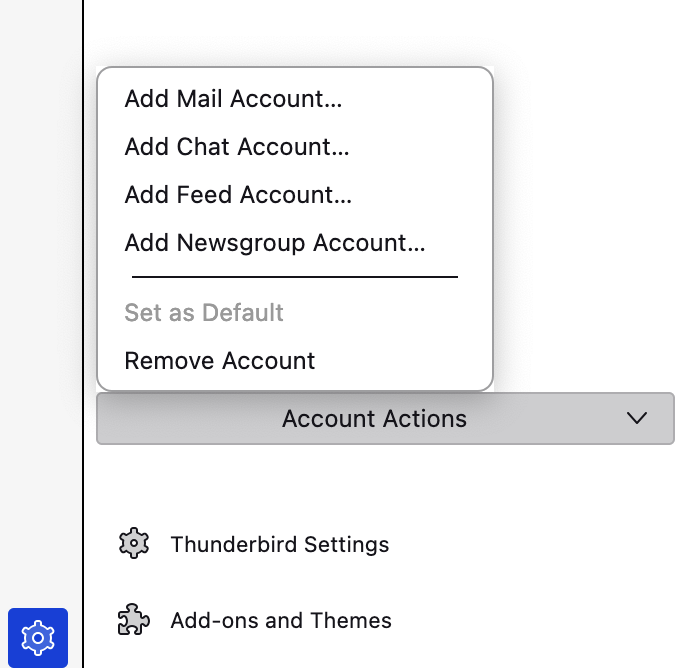
Goto account setting and "Add Mail Account".

[![image.png](https://hwiki.simmy.org/uploads/images/gallery/2024-09/scaled-1680-/rvvimage.png)](https://hwiki.simmy.org/uploads/images/gallery/2024-09/rvvimage.png)
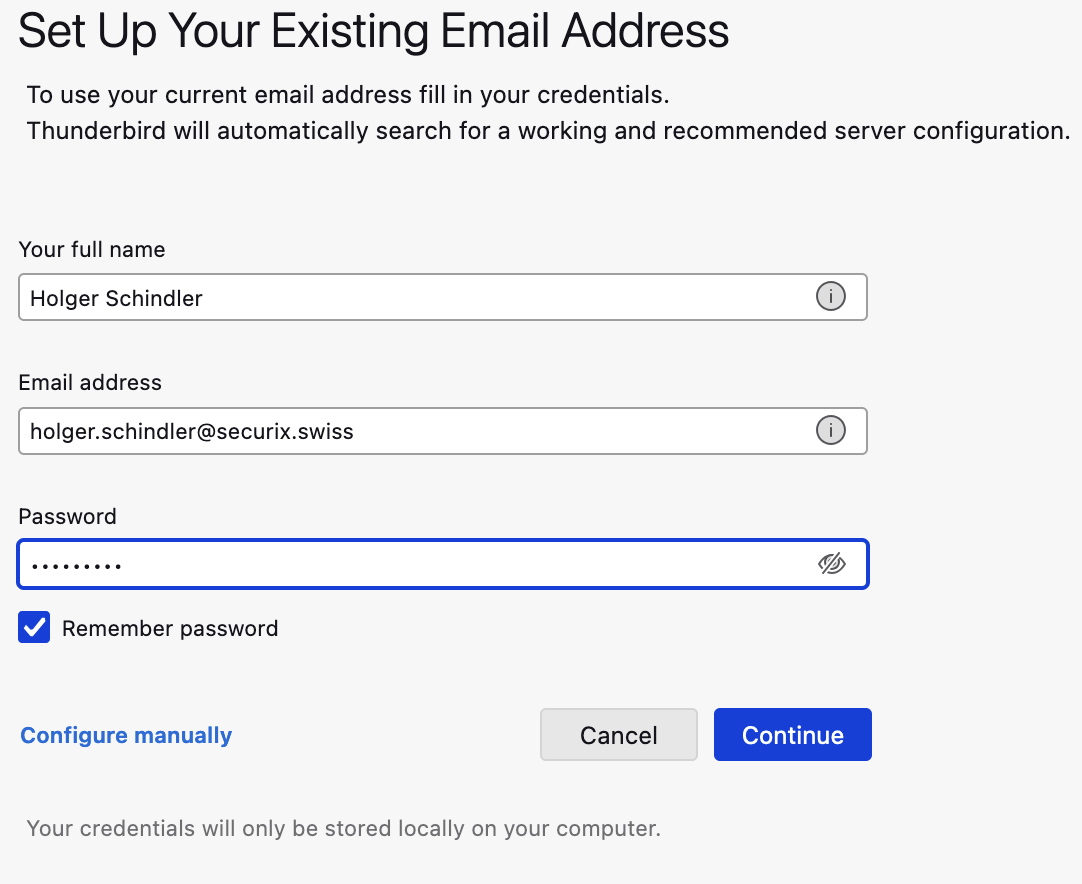
You will need your E-Mail address and your password.

After clicking continue, you will be asked to enter your password again. No matter what happens next, you will return to Thunderbird.

[![image.png](https://hwiki.simmy.org/uploads/images/gallery/2024-09/scaled-1680-/Bdnimage.png)](https://hwiki.simmy.org/uploads/images/gallery/2024-09/Bdnimage.png)
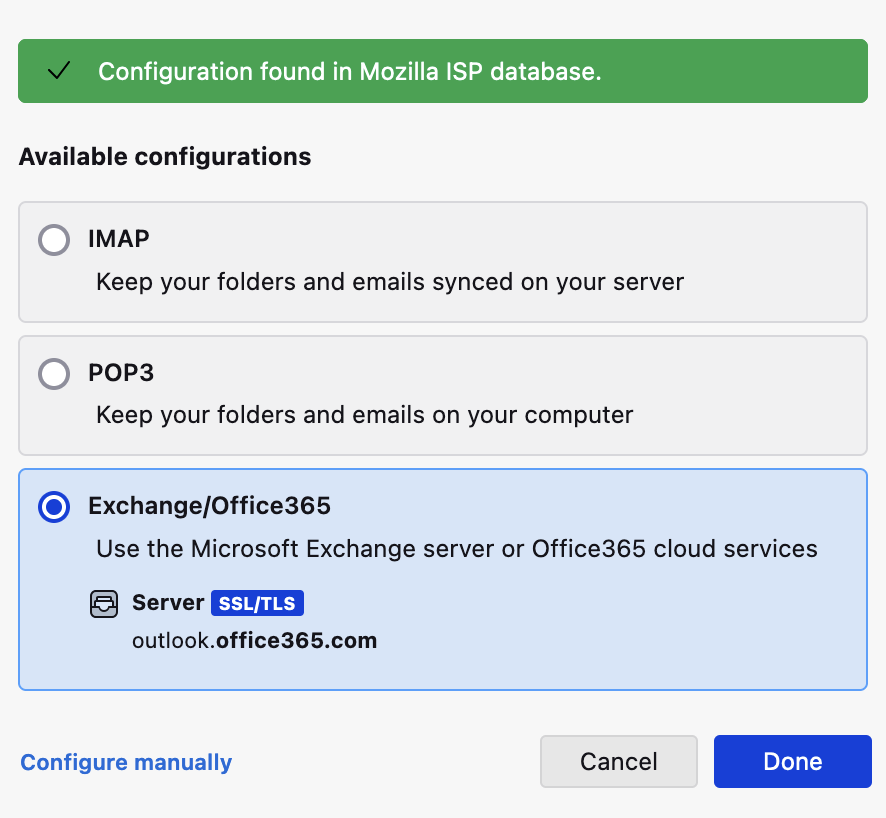
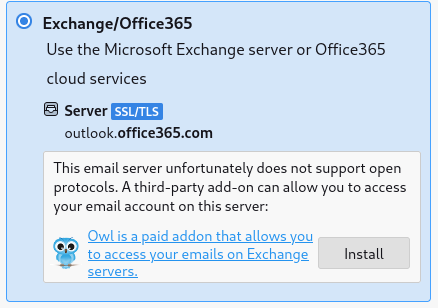
Select "Exchange/Office365" and click on "Done".

<p class="callout info">If you are asked to install "OWL", please do it.</p>

[![image.png](https://hwiki.simmy.org/uploads/images/gallery/2024-09/scaled-1680-/dUKimage.png)](https://hwiki.simmy.org/uploads/images/gallery/2024-09/dUKimage.png)

## Hint

You are now able to use E-Mail and Calendar functionality. So far Contacts/Address book are not working.

Teams:

On the left side you should find the Teams icon. Hover gently over it. It will then show all connected Microsoft Accounts. If you click on one of those account, a new tab will open for teams. Repeat until you opened all the Teams for your tenants.

[![image.png](https://hwiki.simmy.org/uploads/images/gallery/2024-09/scaled-1680-/DDXimage.png)](https://hwiki.simmy.org/uploads/images/gallery/2024-09/DDXimage.png)

# CSA Webflow

# Webflow User Guide

## 1. Logging In and Dashboard

visit [webflow.com/login](https://webflow.com/login)

[![image.png](https://hwiki.simmy.org/uploads/images/gallery/2024-09/scaled-1680-/Yf3image.png)](https://hwiki.simmy.org/uploads/images/gallery/2024-09/Yf3image.png)

Enter username and password.

[![image.png](https://hwiki.simmy.org/uploads/images/gallery/2024-09/scaled-1680-/tusimage.png)](https://hwiki.simmy.org/uploads/images/gallery/2024-09/tusimage.png)

Enter your TOTP Token.

<div class="pb-2.5 flex flex-col justify-between w-full flex-auto overflow-auto h-0 max-w-full z-10 scrollbar-hidden " id="bkmrk-after-logging-in%2C-yo"><div class="h-full w-full flex flex-col pt-2 pb-4"><div class="h-full flex"><div class="w-full pt-2"><div class="w-full  pb-12"><div class="flex flex-col justify-between px-5 mb-3 max-w-5xl mx-auto rounded-lg group"><div class="flex w-full message-b30b26e7-1eff-47d1-8981-f5f42aa5f193 svelte-1u5gq5j"><div class="w-full overflow-hidden pl-1"><div class="chat-assistant w-full min-w-full markdown-prose svelte-1u5gq5j"><div class="w-full flex flex-col">- After logging in, you will be directed to the dashboard.
- The dashboard provides an overview of all pages in your project.

</div></div></div></div></div></div></div></div></div></div>## 2. Page Settings

<div class="pb-2.5 flex flex-col justify-between w-full flex-auto overflow-auto h-0 max-w-full z-10 scrollbar-hidden " id="bkmrk-navigate-to-%22setting"><div class="h-full w-full flex flex-col pt-2 pb-4"><div class="h-full flex"><div class="w-full pt-2"><div class="w-full  pb-12"><div class="flex flex-col justify-between px-5 mb-3 max-w-5xl mx-auto rounded-lg group"><div class="flex w-full message-b30b26e7-1eff-47d1-8981-f5f42aa5f193 svelte-1u5gq5j"><div class="w-full overflow-hidden pl-1"><div><div class="chat-assistant w-full min-w-full markdown-prose svelte-1u5gq5j"><div><div class="w-full flex flex-col">- Navigate to "Settings" for each page.
- Here you can make important settings: 
    - SEO settings (title, meta tags)
    - OpenGraph info (images for sharing)

</div></div></div></div></div></div></div></div></div></div></div></div>## 3. Designer

<div class="pb-2.5 flex flex-col justify-between w-full flex-auto overflow-auto h-0 max-w-full z-10 scrollbar-hidden " id="bkmrk-click-on-%22designer%22-"><div class="h-full w-full flex flex-col pt-2 pb-4"><div class="h-full flex"><div class="w-full pt-2"><div class="w-full  pb-12"><div class="flex flex-col justify-between px-5 mb-3 max-w-5xl mx-auto rounded-lg group"><div class="flex w-full message-b30b26e7-1eff-47d1-8981-f5f42aa5f193 svelte-1u5gq5j"><div class="w-full overflow-hidden pl-1"><div><div class="chat-assistant w-full min-w-full markdown-prose svelte-1u5gq5j"><div><div class="w-full flex flex-col">- Click on "Designer" to enter the editing mode.
- In the designer, you can visually edit pages and manage content from static pages.

</div></div></div></div></div></div></div></div></div></div></div></div>### 3.1 Design Options

<div class="pb-2.5 flex flex-col justify-between w-full flex-auto overflow-auto h-0 max-w-full z-10 scrollbar-hidden " id="bkmrk-various-design-optio"><div class="h-full w-full flex flex-col pt-2 pb-4"><div class="h-full flex"><div class="w-full pt-2"><div class="w-full  pb-12"><div class="flex flex-col justify-between px-5 mb-3 max-w-5xl mx-auto rounded-lg group"><div class="flex w-full message-b30b26e7-1eff-47d1-8981-f5f42aa5f193 svelte-1u5gq5j"><div class="w-full overflow-hidden pl-1"><div><div class="chat-assistant w-full min-w-full markdown-prose svelte-1u5gq5j"><div><div class="w-full flex flex-col">- Various design options are available.
- Tip: Group related elements in boxes for structural changes.

</div></div></div></div></div></div></div></div></div></div></div></div>### 3.2 Components

<div class="pb-2.5 flex flex-col justify-between w-full flex-auto overflow-auto h-0 max-w-full z-10 scrollbar-hidden " id="bkmrk-pre-built-elements-l"><div class="h-full w-full flex flex-col pt-2 pb-4"><div class="h-full flex"><div class="w-full pt-2"><div class="w-full  pb-12"><div class="flex flex-col justify-between px-5 mb-3 max-w-5xl mx-auto rounded-lg group"><div class="flex w-full message-b30b26e7-1eff-47d1-8981-f5f42aa5f193 svelte-1u5gq5j"><div class="w-full overflow-hidden pl-1"><div><div class="chat-assistant w-full min-w-full markdown-prose svelte-1u5gq5j"><div><div class="w-full flex flex-col">- Pre-built elements like banners or navigation bars can be found here.

</div></div></div></div></div></div></div></div></div></div></div></div>### 3.3 Variables

<div class="pb-2.5 flex flex-col justify-between w-full flex-auto overflow-auto h-0 max-w-full z-10 scrollbar-hidden " id="bkmrk-define-global-color-"><div class="h-full w-full flex flex-col pt-2 pb-4"><div class="h-full flex"><div class="w-full pt-2"><div class="w-full  pb-12"><div class="flex flex-col justify-between px-5 mb-3 max-w-5xl mx-auto rounded-lg group"><div class="flex w-full message-b30b26e7-1eff-47d1-8981-f5f42aa5f193 svelte-1u5gq5j"><div class="w-full overflow-hidden pl-1"><div><div class="chat-assistant w-full min-w-full markdown-prose svelte-1u5gq5j"><div><div class="w-full flex flex-col">- Define global color schemes here.

</div></div></div></div></div></div></div></div></div></div></div></div>### 3.4 Style Selectors

<div class="pb-2.5 flex flex-col justify-between w-full flex-auto overflow-auto h-0 max-w-full z-10 scrollbar-hidden " id="bkmrk-useful-for-developme"><div class="h-full w-full flex flex-col pt-2 pb-4"><div class="h-full flex"><div class="w-full pt-2"><div class="w-full  pb-12"><div class="flex flex-col justify-between px-5 mb-3 max-w-5xl mx-auto rounded-lg group"><div class="flex w-full message-b30b26e7-1eff-47d1-8981-f5f42aa5f193 svelte-1u5gq5j"><div class="w-full overflow-hidden pl-1"><div><div class="chat-assistant w-full min-w-full markdown-prose svelte-1u5gq5j"><div><div class="w-full flex flex-col">- Useful for development and styling.

</div></div></div></div></div></div></div></div></div></div></div></div>### 3.5 Images

<div class="pb-2.5 flex flex-col justify-between w-full flex-auto overflow-auto h-0 max-w-full z-10 scrollbar-hidden " id="bkmrk-manage-all-images-on"><div class="h-full w-full flex flex-col pt-2 pb-4"><div class="h-full flex"><div class="w-full pt-2"><div class="w-full  pb-12"><div class="flex flex-col justify-between px-5 mb-3 max-w-5xl mx-auto rounded-lg group"><div class="flex w-full message-b30b26e7-1eff-47d1-8981-f5f42aa5f193 svelte-1u5gq5j"><div class="w-full overflow-hidden pl-1"><div><div class="chat-assistant w-full min-w-full markdown-prose svelte-1u5gq5j"><div><div class="w-full flex flex-col">- Manage all images on your website from here.

</div></div></div></div></div></div></div></div></div></div></div></div>## 4. CMS Functions

<div class="pb-2.5 flex flex-col justify-between w-full flex-auto overflow-auto h-0 max-w-full z-10 scrollbar-hidden " id="bkmrk-click-on-the-%22cms%22-t"><div class="h-full w-full flex flex-col pt-2 pb-4"><div class="h-full flex"><div class="w-full pt-2"><div class="w-full  pb-12"><div class="flex flex-col justify-between px-5 mb-3 max-w-5xl mx-auto rounded-lg group"><div class="flex w-full message-b30b26e7-1eff-47d1-8981-f5f42aa5f193 svelte-1u5gq5j"><div class="w-full overflow-hidden pl-1"><div><div class="chat-assistant w-full min-w-full markdown-prose svelte-1u5gq5j"><div><div class="w-full flex flex-col">- Click on the "CMS" tab.
- Here you can manage dynamic content like events, news, etc.

</div></div></div></div></div></div></div></div></div></div></div></div>### 4.1 Collections

<div class="pb-2.5 flex flex-col justify-between w-full flex-auto overflow-auto h-0 max-w-full z-10 scrollbar-hidden " id="bkmrk-each-collection-%28e.g"><div class="h-full w-full flex flex-col pt-2 pb-4"><div class="h-full flex"><div class="w-full pt-2"><div class="w-full  pb-12"><div class="flex flex-col justify-between px-5 mb-3 max-w-5xl mx-auto rounded-lg group"><div class="flex w-full message-b30b26e7-1eff-47d1-8981-f5f42aa5f193 svelte-1u5gq5j"><div class="w-full overflow-hidden pl-1"><div><div class="chat-assistant w-full min-w-full markdown-prose svelte-1u5gq5j"><div><div class="w-full flex flex-col">- Each collection (e.g., News, Events) has its own data structure.
- Click on a collection to view and edit its entries.

</div></div></div></div></div></div></div></div></div></div></div></div>### 4.2 Creating and Editing Items

<div class="pb-2.5 flex flex-col justify-between w-full flex-auto overflow-auto h-0 max-w-full z-10 scrollbar-hidden " id="bkmrk-select-a-collection."><div class="h-full w-full flex flex-col pt-2 pb-4"><div class="h-full flex"><div class="w-full pt-2"><div class="w-full  pb-12"><div class="flex flex-col justify-between px-5 mb-3 max-w-5xl mx-auto rounded-lg group"><div class="flex w-full message-b30b26e7-1eff-47d1-8981-f5f42aa5f193 svelte-1u5gq5j"><div class="w-full overflow-hidden pl-1"><div><div class="chat-assistant w-full min-w-full markdown-prose svelte-1u5gq5j"><div><div class="w-full flex flex-col">- Select a collection.
- Click on "New Item" or an existing item.
- Fill in the fields: 
    - Title
    - Slug (URL)
    - Date
    - Content
    - Images
    - etc.

</div></div></div></div></div></div></div></div></div></div></div></div>### 4.3 Text Formatting

<div class="pb-2.5 flex flex-col justify-between w-full flex-auto overflow-auto h-0 max-w-full z-10 scrollbar-hidden " id="bkmrk-double-click-on-text"><div class="h-full w-full flex flex-col pt-2 pb-4"><div class="h-full flex"><div class="w-full pt-2"><div class="w-full  pb-12"><div class="flex flex-col justify-between px-5 mb-3 max-w-5xl mx-auto rounded-lg group"><div class="flex w-full message-b30b26e7-1eff-47d1-8981-f5f42aa5f193 svelte-1u5gq5j"><div class="w-full overflow-hidden pl-1"><div><div class="chat-assistant w-full min-w-full markdown-prose svelte-1u5gq5j"><div><div class="w-full flex flex-col">- Double-click on text fields for formatting options.
- Available options: Bold, Italic, Headings, etc.

</div></div></div></div></div></div></div></div></div></div></div></div>### 4.4 Image Upload

<div class="pb-2.5 flex flex-col justify-between w-full flex-auto overflow-auto h-0 max-w-full z-10 scrollbar-hidden " id="bkmrk-upload-images-in-the"><div class="h-full w-full flex flex-col pt-2 pb-4"><div class="h-full flex"><div class="w-full pt-2"><div class="w-full  pb-12"><div class="flex flex-col justify-between px-5 mb-3 max-w-5xl mx-auto rounded-lg group"><div class="flex w-full message-b30b26e7-1eff-47d1-8981-f5f42aa5f193 svelte-1u5gq5j"><div class="w-full overflow-hidden pl-1"><div><div class="chat-assistant w-full min-w-full markdown-prose svelte-1u5gq5j"><div><div class="w-full flex flex-col">- Upload images in the specified sizes.
- Tip: Prepare images in the correct dimensions before uploading.

</div></div></div></div></div></div></div></div></div></div></div></div>## 5. Multilingual Support

<div class="pb-2.5 flex flex-col justify-between w-full flex-auto overflow-auto h-0 max-w-full z-10 scrollbar-hidden " id="bkmrk-webflow-supports-mul"><div class="h-full w-full flex flex-col pt-2 pb-4"><div class="h-full flex"><div class="w-full pt-2"><div class="w-full  pb-12"><div class="flex flex-col justify-between px-5 mb-3 max-w-5xl mx-auto rounded-lg group"><div class="flex w-full message-b30b26e7-1eff-47d1-8981-f5f42aa5f193 svelte-1u5gq5j"><div class="w-full overflow-hidden pl-1"><div><div class="chat-assistant w-full min-w-full markdown-prose svelte-1u5gq5j"><div><div class="w-full flex flex-col">- Webflow supports multilingual websites.
- Note that images with text may need to be created separately for each language.

</div></div></div></div></div></div></div></div></div></div></div></div>## 6. Video Integration

<div class="pb-2.5 flex flex-col justify-between w-full flex-auto overflow-auto h-0 max-w-full z-10 scrollbar-hidden " id="bkmrk-go-to-%22video-resourc"><div class="h-full w-full flex flex-col pt-2 pb-4"><div class="h-full flex"><div class="w-full pt-2"><div class="w-full  pb-12"><div class="flex flex-col justify-between px-5 mb-3 max-w-5xl mx-auto rounded-lg group"><div class="flex w-full message-b30b26e7-1eff-47d1-8981-f5f42aa5f193 svelte-1u5gq5j"><div class="w-full overflow-hidden pl-1"><div><div class="chat-assistant w-full min-w-full markdown-prose svelte-1u5gq5j"><div><div class="w-full flex flex-col">- Go to "Video Resources".
- Add the video link (supports YouTube, Vimeo, etc.).
- Webflow will automatically embed the video.

</div></div></div></div></div></div></div></div></div></div></div></div>## 7. Customizing Fields

<div class="pb-2.5 flex flex-col justify-between w-full flex-auto overflow-auto h-0 max-w-full z-10 scrollbar-hidden " id="bkmrk-click-on-the-gear-ic"><div class="h-full w-full flex flex-col pt-2 pb-4"><div class="h-full flex"><div class="w-full pt-2"><div class="w-full  pb-12"><div class="flex flex-col justify-between px-5 mb-3 max-w-5xl mx-auto rounded-lg group"><div class="flex w-full message-b30b26e7-1eff-47d1-8981-f5f42aa5f193 svelte-1u5gq5j"><div class="w-full overflow-hidden pl-1"><div><div class="chat-assistant w-full min-w-full markdown-prose svelte-1u5gq5j"><div><div class="w-full flex flex-col">- Click on the gear icon next to a field.
- Select "Custom Fields".
- Here you can add or change options (e.g., for categories).

</div></div></div></div></div></div></div></div></div></div></div></div>## 8. Publishing

<div class="pb-2.5 flex flex-col justify-between w-full flex-auto overflow-auto h-0 max-w-full z-10 scrollbar-hidden " id="bkmrk-click-on-%22publish%22-i"><div class="h-full w-full flex flex-col pt-2 pb-4"><div class="h-full flex"><div class="w-full pt-2"><div class="w-full  pb-12"><div class="flex flex-col justify-between px-5 mb-3 max-w-5xl mx-auto rounded-lg group"><div class="flex w-full message-b30b26e7-1eff-47d1-8981-f5f42aa5f193 svelte-1u5gq5j"><div class="w-full overflow-hidden pl-1"><div><div class="chat-assistant w-full min-w-full markdown-prose svelte-1u5gq5j"><div><div class="w-full flex flex-col">- Click on "Publish" if you want to go live with your changes.
- Choose between Staging and Production.
- Click on "Publish to selected domains".

</div></div></div></div></div></div></div></div></div></div></div></div>## 9. SEO and Social Media Optimization

### 9.1 SEO Settings

<div class="pb-2.5 flex flex-col justify-between w-full flex-auto overflow-auto h-0 max-w-full z-10 scrollbar-hidden " id="bkmrk-go-to-page-settings."><div class="h-full w-full flex flex-col pt-2 pb-4"><div class="h-full flex"><div class="w-full pt-2"><div class="w-full  pb-12"><div class="flex flex-col justify-between px-5 mb-3 max-w-5xl mx-auto rounded-lg group"><div class="flex w-full message-b30b26e7-1eff-47d1-8981-f5f42aa5f193 svelte-1u5gq5j"><div class="w-full overflow-hidden pl-1"><div><div class="chat-assistant w-full min-w-full markdown-prose svelte-1u5gq5j"><div><div class="w-full flex flex-col">- Go to page settings.
- Fill out the SEO fields (title, description).

</div></div></div></div></div></div></div></div></div></div></div></div>### 9.2 Open Graph Settings

<div class="pb-2.5 flex flex-col justify-between w-full flex-auto overflow-auto h-0 max-w-full z-10 scrollbar-hidden " id="bkmrk-configure-open-graph"><div class="h-full w-full flex flex-col pt-2 pb-4"><div class="h-full flex"><div class="w-full pt-2"><div class="w-full  pb-12"><div class="flex flex-col justify-between px-5 mb-3 max-w-5xl mx-auto rounded-lg group"><div class="flex w-full message-b30b26e7-1eff-47d1-8981-f5f42aa5f193 svelte-1u5gq5j"><div class="w-full overflow-hidden pl-1"><div><div class="chat-assistant w-full min-w-full markdown-prose svelte-1u5gq5j"><div><div class="w-full flex flex-col">- Configure Open Graph settings for better sharing on social media.
- Upload a specific image for social media shares.

</div></div></div></div></div></div></div></div></div></div></div></div>### 9.3 Testing

<div class="pb-2.5 flex flex-col justify-between w-full flex-auto overflow-auto h-0 max-w-full z-10 scrollbar-hidden " id="bkmrk-use-tools-like-the-%22"><div class="h-full w-full flex flex-col pt-2 pb-4"><div class="h-full flex"><div class="w-full pt-2"><div class="w-full  pb-12"><div class="flex flex-col justify-between px-5 mb-3 max-w-5xl mx-auto rounded-lg group"><div class="flex w-full message-b30b26e7-1eff-47d1-8981-f5f42aa5f193 svelte-1u5gq5j"><div class="w-full overflow-hidden pl-1"><div><div class="chat-assistant w-full min-w-full markdown-prose svelte-1u5gq5j"><div><div class="w-full flex flex-col">- Use tools like the "Facebook Sharing Debugger" to test your social media preview: [https://developers.facebook.com/tools/debug/](https://developers.facebook.com/tools/debug/)

</div></div></div></div></div></div></div></div></div></div></div></div>## Tips and Tricks

<div class="pb-2.5 flex flex-col justify-between w-full flex-auto overflow-auto h-0 max-w-full z-10 scrollbar-hidden " id="bkmrk-utilize-the-staging-"><div class="h-full w-full flex flex-col pt-2 pb-4"><div class="h-full flex"><div class="w-full pt-2"><div class="w-full  pb-12"><div class="flex flex-col justify-between px-5 mb-3 max-w-5xl mx-auto rounded-lg group"><div class="flex w-full message-b30b26e7-1eff-47d1-8981-f5f42aa5f193 svelte-1u5gq5j" id="bkmrk-utilize-the-staging--1"><div class="w-full overflow-hidden pl-1"><div><div class="chat-assistant w-full min-w-full markdown-prose svelte-1u5gq5j"><div><div class="w-full flex flex-col">- Utilize the staging environment to test changes before publishing them.
- Ensure consistent image sizes for a uniform design.
- Regularly check your SEO and Open Graph settings for optimal visibility.

</div></div></div><div class="flex justify-start overflow-x-auto buttons text-gray-600 dark:text-gray-500 mt-0.5 svelte-1u5gq5j"><div aria-label="Edit" class="flex"><button class="visible p-1.5 hover:bg-black/5 dark:hover:bg-white/5 rounded-lg dark:hover:text-white hover:text-black transition"><svg class="w-4 h-4" fill="none" stroke="currentColor" stroke-width="2.3" viewbox="0 0 24 24" xmlns="http://www.w3.org/2000/svg"></svg></button>  
</div><div aria-label="Copy" class="flex"><button class="visible p-1.5 hover:bg-black/5 dark:hover:bg-white/5 rounded-lg dark:hover:text-white hover:text-black transition copy-response-button"><svg class="w-4 h-4" fill="none" stroke="currentColor" stroke-width="2.3" viewbox="0 0 24 24" xmlns="http://www.w3.org/2000/svg"></svg></button>  
</div><div aria-label="Read Aloud" class="flex"><button class="visible p-1.5 hover:bg-black/5 dark:hover:bg-white/5 rounded-lg dark:hover:text-white hover:text-black transition" id="bkmrk--2"><svg class="w-4 h-4" fill="none" stroke="currentColor" stroke-width="2.3" viewbox="0 0 24 24" xmlns="http://www.w3.org/2000/svg"></svg></button>  
</div><div aria-label="Good Response" class="flex"><button class="visible p-1.5 hover:bg-black/5 dark:hover:bg-white/5 rounded-lg  dark:hover:text-white hover:text-black transition"><svg class="w-4 h-4" fill="none" stroke="currentColor" stroke-linecap="round" stroke-linejoin="round" stroke-width="2.3" viewbox="0 0 24 24" xmlns="http://www.w3.org/2000/svg"></svg></button>  
</div><div aria-label="Bad Response" class="flex"><button class="visible p-1.5 hover:bg-black/5 dark:hover:bg-white/5 rounded-lg  dark:hover:text-white hover:text-black transition"><svg class="w-4 h-4" fill="none" stroke="currentColor" stroke-linecap="round" stroke-linejoin="round" stroke-width="2.3" viewbox="0 0 24 24" xmlns="http://www.w3.org/2000/svg"></svg></button>  
</div><div aria-label="Continue Response" class="flex"><button class="visible p-1.5 hover:bg-black/5 dark:hover:bg-white/5 rounded-lg dark:hover:text-white hover:text-black transition regenerate-response-button" id="bkmrk--3" type="button"><svg class="w-4 h-4" fill="none" stroke="currentColor" stroke-width="2.3" viewbox="0 0 24 24" xmlns="http://www.w3.org/2000/svg"></svg></button>  
</div><div aria-label="Regenerate" class="flex"><button class="visible p-1.5 hover:bg-black/5 dark:hover:bg-white/5 rounded-lg dark:hover:text-white hover:text-black transition regenerate-response-button" type="button"><svg class="w-4 h-4" fill="none" stroke="currentColor" stroke-width="2.3" viewbox="0 0 24 24" xmlns="http://www.w3.org/2000/svg"></svg></button>  
</div></div></div></div></div></div></div></div></div></div></div><div class="" id="bkmrk--4"><div class="w-full font-primary"><div class="-mb-0.5 mx-auto inset-x-0 bg-transparent flex justify-center"><div class="flex flex-col max-w-6xl px-2.5 md:px-6 w-full"><div class="relative">  
</div><div class="w-full relative">  
</div></div></div><div class="bg-white dark:bg-gray-900"><div class="max-w-6xl px-2.5 md:px-6 mx-auto inset-x-0"><div class="pb-2"><form class="w-full flex gap-1.5"><div class="flex-1 flex flex-col relative w-full rounded-3xl px-1.5 bg-gray-50 dark:bg-gray-850 dark:text-gray-100" dir="LTR"><div class="flex"><div class="ml-0.5 self-end mb-1.5 flex space-x-1"></div></div></div></form></div></div></div></div></div>

# Docker Tips & Tricks

# Name resolution

## Introduction

DNS sucks in docker. However, there are two fixes.

## Fix no. 1

Create `/etc/docker/daemon.json`:

```ini
{
  "dns": ["192.168.1.2", "192.168.1.25"]
}
```

```bash
sudo systemctl daemon-reload
sudo systemctl restart docker
sudo docker run --rm alpine sh -c "cat /etc/resolv.conf && nslookup hfile.simmy.org"
```

<span style="color: rgb(34, 34, 34); font-family: var(--font-heading, var(--font-body)); font-size: 2.8275em;">Fix no. 2</span>

Edit etc/default/docker

```ini
# Here in Debian, this file is sourced by:
# - /etc/init.d/docker (sysvinit)
# - /etc/init/docker (upstart)
# - systemd's docker.service

# Use of this file for configuring your Docker daemon is discouraged.

# The recommended alternative is "/etc/docker/daemon.json", as described in:
# https://docs.docker.com/engine/reference/commandline/dockerd/#daemon-configuration-file

# If that does not suit your needs, try a systemd drop-in file, as described in:
# https://docs.docker.com/config/daemon/systemd/
# Docker Upstart and SysVinit configuration file

#
# THIS FILE DOES NOT APPLY TO SYSTEMD
#
# Please see the documentation for "systemd drop-ins":
# https://docs.docker.com/engine/admin/systemd/
#

# Customize location of Docker binary (especially for development testing).
#DOCKERD="/usr/local/bin/dockerd"

# Use DOCKER_OPTS to modify the daemon startup options.
DOCKER_OPTS="--dns=192.168.1.2 --dns 192.168.1.25"

# If you need Docker to use an HTTP proxy, it can also be specified here.
#export http_proxy="http://127.0.0.1:3128/"

# This is also a handy place to tweak where Docker's temporary files go.
#export DOCKER_TMPDIR="/mnt/bigdrive/docker-tmp"
```

<p class="callout info">DOCKER\_OPTS="--dns=192.168.1.2 --dns 192.168.1.25"</p>

<p class="callout warning">It's mandatory to keep this DNS configuration up to date. Otherwise NPM will not be able to resolve internal addresses.</p>

```bash
sudo systemctl daemon-reload
sudo systemctl restart docker
sudo docker run --rm alpine sh -c "cat /etc/resolv.conf && nslookup hfile.simmy.org"
```